What Is Maintenance Therapy for Ovarian Cancer?
Maintenance therapy is an ongoing medical treatment that helps keep ovarian cancer under control. Maintenance treatments do not cure cancer, but they can prevent disease progression, meaning people have longer periods of time between further treatments where their cancer is stable.
These maintenance therapies are often given after initial therapies, such as surgery or frontline chemotherapy, to prevent or significantly delay the cancer from returning.
Treatments include targeted drugs like PARP inhibitors and Bevacizumab (Avastin) which are designed to extend remission and help maintain quality of life over an extended period.
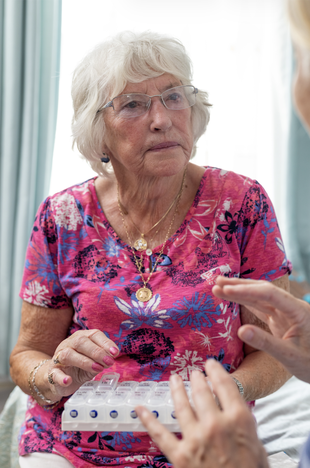
Maintenance therapy stock image
How does ovarian cancer maintenance therapy work?
If you are diagnosed with ovarian cancer, you will usually be treated with an initial combination of chemotherapy and surgery to reduce, or remove, the cancer.
Around 70 percent of people with advanced ovarian cancer have a relapse within three years.
Maintenance therapy helps keep the cancer under control for as long as possible and can delay the time it takes for the cancer to come back or start growing again.
The difference between maintenance therapy and initial chemotherapy
The difference between maintenance therapy and initial chemotherapy is in the length of the treatment but also in what the treatment aims to do.
Initial chemotherapy is an aggressive, short-term treatment meant to shrink or kill cancer cells. Maintenance therapy is a lower-intensity, long-term treatment that aims to keep the cancer from returning.
Types of maintenance drugs for ovarian cancer
There are different types of maintenance drugs available to people with ovarian cancer. Find out more about maintenance therapy drugs and how they work below.
PARP inhibitors
PARP inhibitors are a new class of maintenance treatment becoming more common when treating ovarian cancer. These inhibitors work, as the name suggests, to prevent cancer from spreading by stopping a protein called PARP from performing its usual job of helping damaged cells repair themselves.
PARP inhibitors can stop (‘inhibit’) this repair process from happening in damaged ovarian cancer cells. This causes the cancer cells to weaken and die. This type of treatment can reduce the chances of the cancer returning or lengthen the time before it does.
Bevacizumab (Avastin) maintenance
Avastin (the brand name of the drug bevacizumab) is primarily an anti-angiogenic treatment, meaning doctors can use this method to starve the tumour of oxygen by stopping the body from growing new blood vessels.
Avastin can also be given alongside chemotherapy and continued afterwards as a maintenance treatment to stop the cancer from coming back.
Bevacizumab maintenance therapy is recommended for women with advanced epithelial ovarian cancer (stages 3 or 4) and is given through a drip (IV) every week in hospital as an outpatient.
Maintenance chemotherapy
Maintenance chemotherapy is when the treatment is given on a regular schedule to keep the cancer under control, stopping the spread and prolonging survival.
Who is eligible for ovarian cancer maintenance therapy?
Eligibility for maintenance therapy on the NHS depends on your specific medical condition, the clinical guidelines for that condition, and whether the treatment has been approved by the National Institute for Health and Care Excellence (NICE) for long-term use.
Maintenance therapy will be applied differently to different stages of cancer. Eligibility is often determined on a case-by-case basis by your GP or clinical team.
Maintenance therapy in advanced ovarian cancer
Maintenance therapy for advanced ovarian cancer is a specialised medical treatment given after initial surgery and chemotherapy to delay disease recurrence and prolong remission.
When do you start ovarian cancer maintenance treatment?
When you start ovarian cancer maintenance treatment depends on the targeted therapy recommended to you by your GP or clinical team. As PARP inhibitors are taken as tablets or capsules by mouth at home, you can normally start taking them 8-12 weeks after you finish chemotherapy.
How long do you stay on ovarian cancer maintenance therapy?
How long you stay on ovarian cancer maintenance therapy depends on the targeted treatment recommended to you by your GP or clinical team.
You continue taking bevacizumab after chemotherapy, this could be for a year or longer if it's working for you and your side effects can be managed. Sometimes bevacizumab is given with another targeted therapy drug called olaprib (a type of PARP inhibitor).
You start taking PARP inhibitors as tablets or capsules every day a few weeks after your last chemotherapy treatment.
How successful is ovarian cancer maintenance therapy?
Targeted therapies for ovarian cancer in the UK are effective at delaying cancer progression, shrinking tumours, and extending life when matched to specific genetic or protein markers.
How long can maintenance therapy extend your life expectancy?
Studies into maintenance therapies often look at progression-free survival, the amount of time after starting a treatment where their cancer hasn’t grown, spread or come back, as well as overall survival, or how long a person lives.
The potential impact of any maintenance therapy depends a lot on your diagnosis, results of biomarker testing, and which type of therapy. How long maintenance therapy can extend your life expectancy varies a lot between patients. Some maintenance therapies increase progression-free survival but do not increase overall survival.
The PAOLA-1 study looking at women who were HRD positive showed that olaparib with bevacizumab not only delayed cancer returning by around 20 months but increased overall survival.
In terms of progression-free survival, for example, the SOLO-1 trial looking at olaparib found that in women with a BRCA mutation, the median time before their cancer returned increased from 14 months to 56 months when they took the drug for two years. Long-term follow up suggests there is a meaningful overall survival benefit.
The PRIMA trial indicated that for women whose tumours were HRD positive, niraparib delayed progression by around 11 months on average but it did not show an overall survival benefit.
Understanding remission and progression-free survival
Both terms remission and progression-free survival relate to different stages of your cancer diagnosis and subsequent treatment.
Remission means there are no signs of cancer on tests or scans. Progression-free survival (PFS) recognises the time between starting treatment aimed at shrinking or controlling the cancer, and signs that it has started to grow again.
Side effects of ovarian cancer maintenance therapy and how to manage them
Side effects of ovarian cancer maintenance therapy recognise a medical problem which doctors believe to be caused by your treatment. Side effects are given a grade from 1-5, depending on how severe they are.
See the side effects grading below:
Grade 1 - no symptoms or mild symptoms that don’t affect day-to-day life and don’t require further treatment
Grade 2 - slightly worse symptoms that may affect parts of day-to-day life and may need treatment
Grade 3 - significant symptoms that do affect day-to-day life and will need treatment
Grade 4 - severe symptoms that can be life threatening and need urgent treatment
Grade 5 - so severe that the person dies. It is very rare for this to happen.
Accessing new maintenance drugs and clinical trials
Before a new maintenance drug is approved it must pass through a rigorous process of tests and trials.
In cancer treatment, clinical trials can test how safe and effective brand-new drugs are in a sample of eligible patients who have chosen to take part in the study. A clinical trial may also test whether a new treatment works well with existing treatment, and what the side-effects are.
If you would like to participate in an ovarian cancer clinical trial, speak to your oncologist.
Sources of support and further guidance
- Read more on targeted therapies for ovarian cancer.
- Cancer Research UK has a useful article on weighing up the pros and cons of participating in medical research to access new maintenance drugs through clinical trialling.
- You can find out about ongoing clinical trials in the UK by visiting the UK Clinical Trials Gateway.
FAQ's
What happens if a maintenance drug stops working?
If a maintenance drug stops working, this could be that while the drug had an initial effect on the cancer's size or growth, the tumour starts to grow again despite treatment. This is what’s known as drug resistance.
One of the ways to overcome drug resistance is by using combination treatments to hit the cancer in multiple ways at the same time using different drugs.
In 2023, the National Institute for Health and Care Excellence (NICE) announced they have approved the combination of olaparib (Lynparza) with bevacizumab (Avastin) for the maintenance treatment of high-grade epithelial ovarian cancer.
Can you work while on maintenance therapy for ovarian cancer?
While receiving maintenance therapy for ovarian cancer, you may need to take some time off work or education to spend in hospital. The amount of time taken off for treatment and recovery will be different for each person.
But, as cancer counts as a ‘disability’ under the Equalities Act 2010 (in England, Scotland and Wales), or the Disability Discrimination Act 1995 (in Northern Ireland), your employer or college/university must be prepared to make reasonable adjustments for treatment and medical appointments, as well as managing how to continue with, or ease back into, work or education.
Read more on workplace rights and financial support.
Are ovarian cancer maintenance treatments available on the NHS?
Olaparib (Lynparza) with bevacizumab (Avastin) is available on the NHS as a possible maintenance treatment for ovarian cancer.
Can you travel abroad while taking maintenance medication?
If you're looking to travel abroad while taking maintenance medication, you are advised to consult your GP or clinical team.
If signed off to travel, be aware that routine travel insurance policies may exclude any risks associated with your cancer or because you have cancer. However, there are more specialist policies available.
If you are travelling to Europe, you can get a free Global Health Insurance Card (GHIC) via the NHS, allowing you to access state healthcare for a reduced cost or sometimes for free. Private clinics abroad can be expensive, while a public facility needs to be clear that they are treating you on the same basis as a local citizen.
Do maintenance drugs cause hair loss?
Some maintenance cancer drugs can cause hair loss or hair thinning, but it depends entirely on the specific drug or drugs used. Many maintenance therapies (like certain immunotherapies or targeted monoclonal antibodies) do not cause hair loss at all.