Marie's Story "There's always hope, but that doesn't take away the heaviness of it all."
When Marie discovered she carried a BRCA2 gene fault, she was in the middle of treatment for breast cancer.
By that point, cancer had already touched her family several times. Her mum had been diagnosed with breast cancer, and she had lost her dad to kidney cancer. But alongside facing her own diagnosis, Marie found herself navigating complex decisions about genetics, future cancer risk and preventive surgery.
Marie shares why she believes knowledge can be empowering, the importance of asking questions, and how she's learning to live with a BRCA2 diagnosis without letting it define her future.
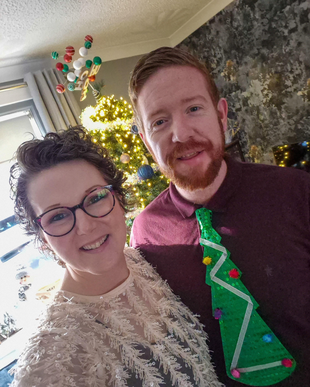
Marie and her partner
My first experience of cancer came when my mum was diagnosed with triple-negative breast cancer. Looking back, no one really clicked that her cancer could have been caused by a genetic fault. Genetic testing was mentioned, but it was presented more as a passing comment than a serious preventative option. It felt more like, "If you'd like to know, you could probably go down this route", rather than something we should carefully consider. As a result, neither my mum nor I explored it.
Once my mum was well enough, I moved to the UK (I am originally from Germany) and have been here ever since, working as a nurse for the NHS.
A while later, I lost my dad to kidney cancer, which is a very rare form of cancer. He died within six months of being diagnosed, and everything happened incredibly quickly. We never had the opportunity to explore whether there could have been a genetic cause, but there was no known family history of kidney cancer.
At the time, I decided to write my university dissertation on preventative measures for people at risk of kidney cancer. While researching it, I found myself wondering whether I should be looking more closely at preventative measures for myself. Both of my parents had been affected by cancer, and it felt sensible to understand my own risk.
I underwent a risk assessment, which showed I had a medium risk of developing a genetically linked cancer in my lifetime, and we discussed starting mammograms when I turned 35.
Then lockdown happened.
Everything was delayed. I tried to get my appointments reinstated and put back on waiting lists, but nothing ever seemed to happen.
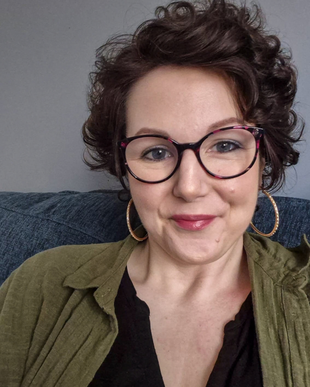
Marie
In July 2024, I found a lump in my breast. The second I felt it, I knew it wasn't normal. I tried telling myself it was nothing and that everything would be okay, but I had a gut feeling that something wasn't right.
Getting a diagnosis took time because the lump presented unusually. Rather than being a clearly defined lump, it was much flatter and spread out, so multiple biopsies were needed before doctors reached a conclusion. Eventually, I was told it was triple-negative breast cancer, the same diagnosis my mum had received. At that point, they also recommended genetic testing.
I had the genetic test in December 2024 and received the results around eight weeks later. It came back positive for BRCA2.
All of this happened in the middle of chemotherapy, and I think that was when the full reality of it started to dawn on me. I have a son who is still young, and suddenly I was thinking about conversations that might need to happen years from now. The thought that I wouldn't be able to properly explain any of this to him for another decade really hit me hard.
The session with the genetic counsellor was the first time I really sat down and digested what life with a BRCA2 gene fault could mean. At that stage it still wasn't clear whether I would need a lumpectomy or a double mastectomy, and there were so many decisions to make while I was still undergoing treatment.
In the end, after six months of chemotherapy, I underwent a double mastectomy with Goldilocks reconstruction, and I'm really pleased with it.
What happened next was something I hadn't anticipated.
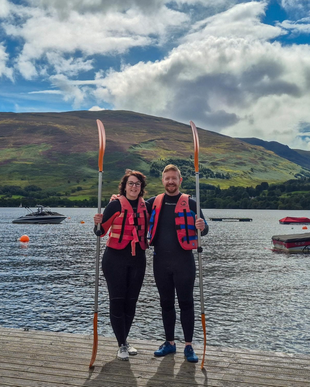
Marie and her partner
After surgery, my tumour tissue was sent away for analysis, and six weeks later I received my pathology results. I was told I hadn't achieved what is known as a pathological complete response and that there were still almost six centimetres of active tumour cells remaining.
After six months of chemotherapy, I was shocked.
I remember asking what that meant and being told that sometimes chemotherapy simply doesn't work as expected. But something about that explanation didn't sit right with me. Triple negative breast cancer is generally expected to respond well to chemotherapy, and I knew that.
I requested a copy of my pathology report because I wanted to understand what had happened. When I read it, I noticed a paragraph stating that the tumour appeared more consistent with Adenoid Cystic Carcinoma (ACC), which behaves very differently to triple negative breast cancer.
I pointed this out and asked for a specialist referral because no one had offered one.
The Christie, a specialist cancer hospital, took me on immediately, and it was there that I learnt that I did not in fact, have triple-negative breast cancer. That was the way it presented under the microscope at the first few stages, but actually I have ACC. Rather than it being breast cancer, it was cancer that was contained in the breast.
ACC of the breast accounts for around 0.1% of breast cancers, and I'm currently the only documented person in the UK and Germany known to have both ACC of the breast and a BRCA2 gene fault, which made my cancer journey very complex and complicated, especially at the start.
The appointments themselves were emotionally overwhelming. Every conversation seemed to bring more information and more decisions, and there were moments when I simply couldn't process everything I was being told.
My partner came to appointments with me because I needed someone there to help take it all in.
I think people sometimes forget the impact cancer has on loved ones. The stress, the worry, the constant uncertainty. My partner carried a huge amount of that. Even now, there are moments when it resurfaces. Recently I had a cold, It was only a cold, but once you've lived through cancer, those fears don't disappear overnight.
I've always believed that knowledge is power, but what does that actually mean long-term?
For me, it means making difficult decisions about risk-reducing surgery and trying to balance those decisions against the impact they could have on the rest of my health. It means thinking about menopause, bone health, heart health and all the things that come with having your ovaries removed. It's a lot to process, especially after everything that came before.
The cancer diagnosis and the BRCA2 diagnosis have always felt like two separate things to me. Cancer was something that happened and, thankfully, my active treatment is now finished. BRCA2 is different because it's something I will carry with me for the rest of my life.
The part I struggle with most isn't necessarily what it means for me. It's what it could mean for my son and other family members.
Over time, though, my perspective has changed.
As difficult as it can be, I'd rather have the knowledge than not have it. The information gives me choices. It means I can act sooner, make informed decisions and potentially reduce my risk in the future. It doesn't feel like a death sentence anymore.
I don't let the BRCA diagnosis dictate my life. The glass is full.
I think you have to be proactive with a diagnosis like this, but there also needs to be a healthy balance between processing what's happened and moving forward. For a while I spent a lot of time supporting other women with breast cancer, but now I'm focusing on healing and recovering myself. I've realised that it's okay not to talk about cancer all the time.
If you had asked me a year ago how I felt about all of this, my answer would probably have been very different. These days, I understand that I can't change the situation. I can share information with family members, raise it during appointments and take preventative action where I can, but I'm not responsible for what other people choose to do with that information.
As time has gone on, my stamina has returned, and my confidence has grown. The self-advocacy has become easier. I still have difficult moments, and there are still decisions ahead of me, but I no longer let BRCA2 define my future.
I think there's always hope, but that doesn't take away the heaviness of it all. You may never completely move away from the experience, but you can learn to move with it.
And it doesn't have to consume your life.
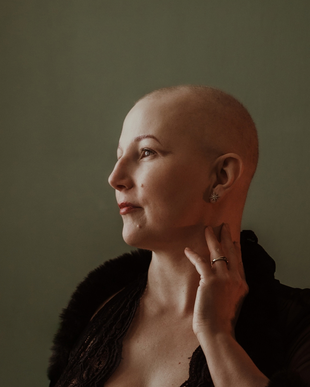
Marie
Around 1 in 400 people carry a BRCA1 or BRCA2 gene fault, often without knowing it. Understanding your family history and inherited risk can help you make informed decisions about your health and access the support that's right for you.
Find out more about BRCA gene faults, inherited risk and the options available if you have a family history of ovarian or breast cancer here - https://ovarian.org.uk/hereditary-cancer-and-risk/