Dianne's story "I was fortunate. Very fortunate. And that's only because of my own advocacy."
After being diagnosed with stage 1 ovarian cancer during the Covid-19 pandemic, Diane became determined to raise awareness of the symptoms and the importance of early diagnosis.
Today, she uses her experience to campaign, fundraise and speak out on behalf of others affected by ovarian cancer. In her own words, she shares the challenges of getting diagnosed and why helping others recognise the symptoms has become her passion.
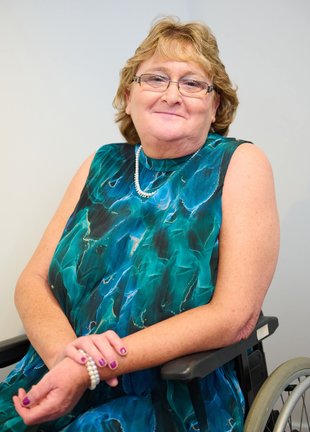
Diane featured in Target Ovarian Cancer’s signs and symptoms campaign, sharing the message that “knowing the symptoms saved my life.”
I've just lost two good friends who were diagnosed at a late stage.
They were helping me to meet MPs and raise awareness, but unfortunately, they're the ones who lost their lives. So, I keep trooping on. That's all you can do, isn't it?
It's because I've met women who are dying with ovarian cancer that I do what I do. I knew the symptoms, and that made a big difference for me.
Looking back, I had bloating, regular water infections, I was going to the toilet a lot, and my appetite had changed. I could only eat half a sandwich while everyone else was eating normally. But that's the thing, you don't necessarily put all those symptoms together.
At the same time, my husband had been diagnosed with stage 3 bowel cancer after a FIT test through the NHS. That test saved his life. He'd been going to the doctors with serious fatigue for a long time, but bowel cancer had never been considered.
Meanwhile, I'd been struggling with my own symptoms and kept saying there was something seriously wrong with me.
The GP sent me down the bowel route. They thought it was diverticulitis or irritable bowel syndrome because I do suffer from diverticulitis. I saw a bowel consultant around the same time my husband was diagnosed, and he told me, "You haven't got cancer."
I was livid because I knew something wasn't right. I went back to my GP and asked if I could see a gynaecologist and have a CA125 blood test. I'd even sent a photograph of my swollen stomach. There was just a niggle in the back of my mind: ovarian cancer. These are the symptoms.
But this was 2021, during Covid, and there was a shortage of blood test vials. My CA125 test wasn't done because the vials were being reserved for emergencies. I couldn't believe it.
Eventually I found somewhere private where I could have a CA125 test and a scan at the same time. Within days, I'd had both.
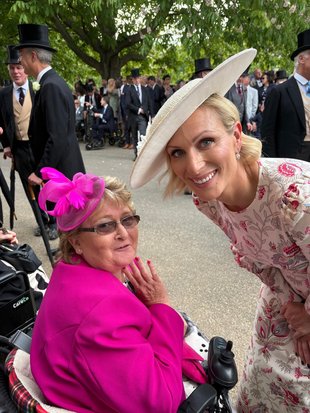
Diane with Zara Tindall at the King’s Royal Garden Party in May 2025, where she was invited in recognition of her campaigning, advocacy and fundraising for ovarian cancer.
I've met women who were diagnosed at stage 4 after repeatedly going back and forth to their GP. One thought it was menopause. Another was trying different diets after being told it was irritable bowel syndrome.
The three of us were all trying to raise awareness together. Now there's only me.
But cancer doesn't simply disappear when treatment ends. People think you're done with it, but you're not. I'm still being monitored, still having scans, and still living with that uncertainty. It becomes your new normal.
I have a large abdominal scar and two hernias from my surgery. There are physical reminders every day. People tell me I look well, and hopefully I am well, but they don't see everything that's happened to your body or the worries you continue to carry. Even now I push for scans because I'd rather know than not know.
I've been fortunate enough to do things I never imagined. I've won an award from the World Ovarian Cancer Coalition, received recognition for campaigning and fundraising, been to the King's Garden Party, spoken in Parliament and shared my story with countless people.
When you're lying in a hospital bed, all you want to do is live. You don't know anything about statistics or awards. You just want to get through surgery and come out the other side.
Now I'm here to see my grandchildren and spend time with them. During Covid and cancer treatment, we missed so much precious time together. Now we make the most of every opportunity.
Physically, I can't do everything I used to do, but I have a voice. That's why I keep sharing my story.
I've had women tell me they went to their GP because they heard me speak on the radio. And knowing that makes a difference. It means speaking out might help someone get diagnosed sooner. All I want is for people to go to the GP.
When I talk about some of the women who inspired me, I still get upset. That's natural because I'm here and they're not.
The two friends I lost wanted the same thing I do - for more people to know the symptoms, get diagnosed earlier and have a better chance of surviving.
So, I'm still doing what they wanted to happen, too.
You don't realise how difficult it is at the time because you're just pushing through. All I was thinking was, am I going to live? Is my husband going to live?
It was a horrible Christmas. We were isolating and couldn't have family with us. Looking back, it was awful, but we got through it. Then in January I got my answer.
I'd been chasing my results and eventually received a letter inviting me to a gynaecological oncology appointment.
Nobody had told me I had cancer, but the moment I saw the word "oncology" I knew. The letter arrived on a Friday, and I spent the whole weekend in panic mode.
When I saw the consultant on the Monday, I told him, "Doctor, just give it to me straight."
And that’s when he explained that it was ovarian cancer and that it was a rare type. I remember asking what stage it was, but he said they couldn't tell at that point.
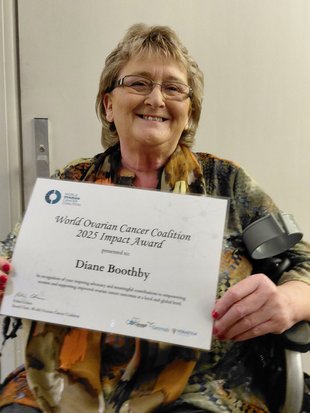
Diane receiving an Impact Award from the World Ovarian Cancer Coalition, recognising her campaigning and advocacy for ovarian cancer.
Everything suddenly felt very real. Up until then, I'd known something wasn't right, but this was the moment I heard the words out loud.
The doctors kept telling me it was going to be a big operation. I remember thinking they were probably dramatising it a bit, but spending that first night in the high-dependency unit, you suddenly understand the scale of what's happened.
Thankfully, after the surgery, I learned that it was stage 1C2 low-grade serous ovarian cancer. The doctors explained that, for low-grade disease, surgery is particularly important because chemotherapy isn't always effective.
I was fortunate. Very fortunate. And that's only because of my own advocacy.
The scan showed ovarian cysts, and the following day they called me about my CA125 result. They told me they didn't want to alarm me, but my result was 375 when it should have been between 0 and 35. They recommended I see a gynaecologist urgently. That's when the journey really began.
When I finally saw a consultant, he was lovely. After more scans, he said he didn't think it was anything major and suggested waiting a few months to see how things developed. I said no. I told him I didn't want to wait another four months. I wanted my ovaries removed.
I had surgery in December and came out of hospital on Christmas Eve. At that point, I still didn't know whether I had cancer or not.
Looking back, the whole period was incredibly traumatic.
It was during Covid. My husband had surgery for bowel cancer and spent seven days in hospital, but I couldn't visit him. Then he was having chemotherapy while I was having surgery, and when I was in hospital, he couldn't visit me either.
Diane's experience highlights why it's so important to know the symptoms of ovarian cancer and trust your instincts if something doesn't feel right.
Persistent bloating, feeling full quickly, needing to pee more often, and ongoing abdominal or pelvic pain can all be symptoms of ovarian cancer.
If you're experiencing symptoms that are unusual for you, don't ignore them. Use our symptoms checker to understand what to look out for and speak to your GP if you're concerned.