Carol's story “If Mum had been listened to in the first place, she may have still been here”
Carol lost her mum, Jean, to ovarian cancer just two weeks after her diagnosis. Despite multiple visits to the GP and repeated hospital admissions, Jean’s symptoms were dismissed for months, until it was too late.
By sharing her story, Carol wants to raise awareness of the symptoms of ovarian cancer, encourage women to trust their instincts, and remind us all how important it is to keep asking questions when something doesn’t feel right.
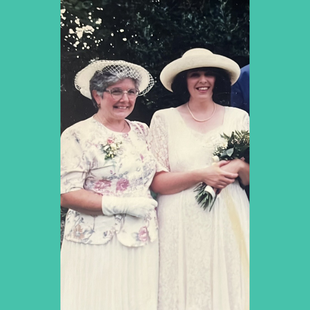
Carol's mother Jean
My mum, Jean, died on 20th March 2005, just a couple of weeks after she was diagnosed with ovarian cancer. She became very ill on 1st January 2005, and by the time the cancer was found, it had already spread to her liver, pancreas and spleen.
What still makes me angry is that my mum’s cancer went undiagnosed despite many visits to her doctor. She was told things like, “It’s your genes,” “It’s your age,” “It’s the menopause.” She was way past menopause. Even when she was admitted to hospital, it was only when she became jaundiced that she finally received the care she so desperately needed, and by then, it was too late.
Looking back now, my mum showed classic ovarian cancer symptoms. She had no appetite and could hardly eat. Her stomach was very swollen (it never went down) and because she was a small-framed, petite woman, it was so noticeable. She used to say she looked seven or eight months pregnant, and she felt embarrassed. She just generally wasn’t well.
This all started in 2004. My mum was 66 at the time and she was not a poorly lady at all. She was physically fit, active, always out in the garden or helping neighbours. In 66 years she’d had three operations - a hysterectomy, a fishbone removed from her throat, and her wisdom teeth out. That was it. She hardly ever went to the doctor, so for her to say she was concerned really meant something.
But she was dismissed.
In August 2004, my mum came to house-sit for me. But during that time, she developed terrible back pain and started using a stick, which just wasn’t my mum. I felt something was really wrong, and I think she did too, but neither of us voiced it. She just kept going, as she always did.
Then on 1st January 2005, she woke up in absolute agony. She thought she’d overindulged over Christmas, but she was in such a terrible state that my dad called an ambulance. She was blue-lighted to hospital. They checked her over and said they thought it was her gallbladder and sent her home with painkillers.
She ended up back in hospital again soon after that. But still, nothing really happened and she was sent home again.
The third time she went in, she could barely eat or drink because she was constantly being sick. She was incredibly dehydrated and put on drips. It was Mother’s Day when I went to see her, and we’d arranged for a reflexologist to come in for mum because we thought it might help her relax. But when the lady was massaging her feet, there were certain parts she couldn’t touch at all as my mum was in dreadful pain.
The next time I went to see her, she was still dreadful. So I started to stamp my feet. I’m not someone who makes a fuss, but I knew I had to. So I went to find someone and once I found a nurse I said to her “can you tell me what is the care plan for my mum? Because she is in a dreadful state.” A doctor prescribed some pills, but my mum couldn’t keep anything down, so of course they came back up. I was furious about that. One nurse even suggested it was because I was there and she was anxious. I knew that wasn’t true.
That’s when I contacted PALS, the Patient Advice and Liaison Service, and told them the whole story.
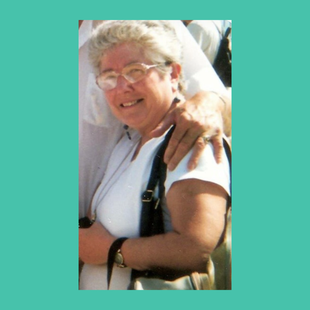
Carol's mother Jean
In no time at all, my mum was sent for a scan and that’s when they discovered the ovarian cancer, and that it had spread. She had also become jaundiced. I met with the team looking after her and asked what we were looking at. The doctor said, “Days. Maybe weeks.”
I asked why my mum had been sent home again and again without anyone taken any notice of her symptoms. And he just said, “I’m so sorry.”
So we took mum home. She was there for about a week and a half before we lost her.
We looked after her, round the clock, with support from Marie Curie nurses and a wonderful local nurse. It was incredibly hard, but it was precious time we wanted with her.
Mum knew she was dying, but we never really talked about it. Once I said to her, “I don’t want to lose you, Mum.” She said, “I know.” That was as much as we could say. She did write us all letters, which I still have, and I’m incredibly grateful for that.
She was just 67 when she died, the age I’m coming up to now. It’s very much on my mind and I do get scared. I think about whether it could happen to me. I’ve since had melanoma, so I’m very body-aware and careful. Thankfully, I was diagnosed and treated quickly, and I know things are better now, but it doesn’t stop the fear.
It still makes me so angry that if she'd been listened to in the first place, she may have still been here. She would be 90 now. She had such a zest for life and I feel robbed. My life's gone on and so many times I've needed her.
Her strength has given me strength. Knowing all she went through, and how brave she was, has made me a stronger person. It’s made me a fighter. I will have my voice heard and I’ve passed that on to my children too.
If I could give anyone advice, I would say don’t ignore symptoms. Ask questions, fight your corner, and If something doesn’t feel right, stamp your feet and don’t take no for an answer.
Knowledge is power, isn’t it really? Use it to help yourself, and then pass it on. We must. Women have got to fight.
Carol’s story shows how important it is to trust your instincts and keep asking questions if something doesn’t feel right.
If you’re experiencing ongoing symptoms or if you feel you’re not being listened to, knowing how to talk to your GP can make all the difference.
To learn about preparing for appointments, explaining your symptoms clearly, and advocating for yourself please click here.