Meet the UK Researchers Behind the AI Accelerator Grant
A new international research project is exploring whether artificial intelligence (AI) can help doctors make better decisions for women with ovarian cancer.
The Global Ovarian Cancer Research Consortium — made up of four ovarian cancer charities from the UK, Canada, Australia and the United States — has awarded its first‑ever AI Accelerator Grant to a team of researchers from each country.
Together, they are asking an important question:
Can smarter technology help doctors better predict which treatments will work, and for how long, for each individual patient?
The project is supported by a $1 million research award, along with $1 million in computing support from Microsoft’s AI for Good Lab. This support allows researchers to study one of the largest collections of ovarian cancer data ever brought together.
But what does that actually mean?
Over many years, thousands of women with ovarian cancer have shared medical information to help research. This includes tumour samples, scans, genetic information, treatment records, and details about how their bodies responded.
This project brings all of that information together and uses AI, a type of computer technology that is very good at spotting patterns, to look for clues that humans alone might miss.
This page introduces the UK researchers involved in the project.
In the sections below, they explain what they’re working on, why it matters, and how it could help improve care for women with ovarian cancer in the future.
Because behind every breakthrough in technology are people and patients working together to turn data into hope.
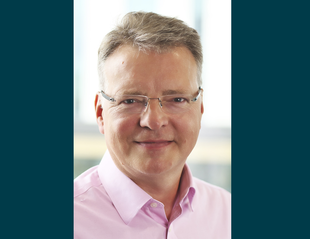
Professor James Brenton
Using tumour biology to guide better treatment choices
Professor James Brenton is leading the UK research team on this project.
He is a doctor and scientist who specialises in ovarian cancer and focuses on understanding the biology of the disease. In simple terms, how cancer cells behave and why they respond differently to treatments.
For this project, Professor Brenton’s team is studying genomic data, which comes from reading the DNA inside cancer cells. DNA acts like an instruction manual for the tumour, and small differences in those instructions can affect how well treatments work.
The team will use AI to learn more from tests that patients already have as part of routine hospital care. The goal is to better predict how someone might respond to treatments such as chemotherapy or newer targeted drugs like PARP inhibitors.
Right now, many treatment decisions are made using limited information — a bit like choosing a route on a map without seeing all the roads. Professor Brenton believes that by listening more carefully to each tumour’s biology, doctors can make choices that better match the individual patient.
Patients are at the heart of this work. Professor Brenton is clear that this research would not be possible without the generosity of women who have donated samples and data. His hope is that this project will move ovarian cancer care towards true precision medicine, where treatments are guided by biology — and where patients are closely involved in shaping research and clinical trials from the start.
"Precision medicine means putting biology, not guesswork, at the centre of care."
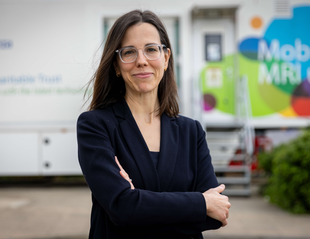
Dr Mireia Crispin
Bringing all the pieces together to see the full picture
Dr Mireia Crispin is an Associate Professor at the University of Cambridge.
Her work focuses on using AI to bring together different types of medical information, such as scans, lab results and genetic data, to better understand how cancers grow and change over time.
You can think of this like a puzzle. Each piece of information tells part of the story, but it’s only when they are put together that the full picture becomes clear.
In this project, Dr Crispin’s team will use AI to combine many different kinds of data at once. This helps researchers see patterns that show how ovarian cancer responds to treatment, and how it might behave in the future.
Ovarian cancer is relatively rare and very complex, which makes global teamwork especially important. By working with researchers in other countries, the team can learn from a much larger and more diverse group of patients, helping make results more reliable and fair.
Patients play a key role here too.
From study participants to patient and public involvement (PPI) groups, women affected by ovarian cancer have helped shape the research from the beginning. Dr Crispin believes that keeping patients at the centre ensures AI is used in ways that are meaningful, practical, and focused on real needs — not just technology for technology’s sake.
“AI helps us bring all the pieces of the puzzle together — images, genes and clinical data — to see the full picture.”
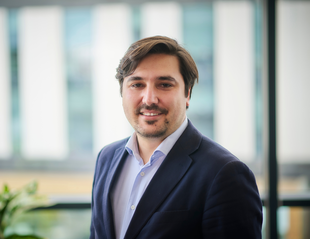
Dr Gabriel Funingana
Turning complex data into tools doctors can actually use
Dr Gabriel Funingana is a medical oncologist and researcher who works closely with patients while also developing AI‑based tools. His focus is precision medicine — finding the right treatment for the right person at the right time.
For this project, Dr Funingana leads the work that turns genetic information into practical tools. He studies data from whole‑genome sequencing, which reads the complete DNA code of cancer cells. Because this type of testing can be expensive, he is also developing ways to transfer what is learned into simpler, more affordable tests that are already used in many hospitals.
Rather than relying on just one test result, Dr Funingana’s work combines information from several sources, such as genetics and pathology, to give doctors a clearer, more balanced view of the disease. It’s similar to getting advice from a team of experts instead of just one opinion.
Dr Funingana is strongly motivated by patient involvement. He sees donated data as a gift that comes with responsibility, to make sure research leads to real improvements in care. His hope is that this project will help doctors make more confident decisions, reduce unnecessary treatments, and support better outcomes and quality of life for women with ovarian cancer.
“Patients have donated their data, and that gives us a responsibility to make AI that truly helps them.”