NICE updates guidance on CA125 testing
NICE (the National Institute for Health and Care Excellence) have updated their guideline NG12 Suspected cancer: recognition and referral, specifically the section explaining how primary care should use the CA125 blood test in diagnosing ovarian cancer.
Here we explain what this means for women with ovarian cancer symptoms.
What is CA125?
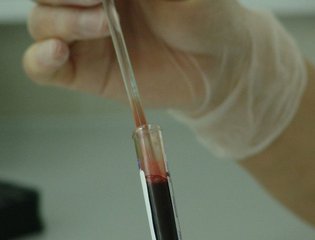
A CA125 blood test is used to check the level of the CA125 protein in the blood to support the diagnosis of a number of things including ovarian cancer. You can read more about the test here.
What has changed?
Up until now, the guidance suggested that anyone with a CA125 reading over 35 units per millilitre (U/mL) should have further investigations, including an ultrasound (note in some areas this is done before waiting for results of CA125).
This guidance gives new thresholds depending on the age of the woman experiencing symptoms of ovarian cancer:
-Women over 40 should be referred for further investigations if their CA125 result is over the original 35 U/ml threshold.
-Women over 50 will be referred for urgent ultrasound at lower CA125 thresholds, which depends on their age.
-For women aged 39 and under, the recommendation is not to rely on CA125 on its own, but instead to consider urgent ultrasound if there are persistent symptoms.
Why did this change?
Research has shown that CA125 is less reliable in women under 40, and we know that the risk of ovarian cancer increases with age. This means that the single threshold of 35 U/ml risked missing cases of the disease in women in higher age brackets, whilst potentially causing harm by over-investigating results in younger women.
What does this mean for me if I have ovarian cancer symptoms?
This doesn’t change what you should do if you are experiencing symptoms of ovarian cancer.
If you are noticing anything different in your body, you should speak to your GP to find out the cause.
You can use our Symptoms Checker to find out if the symptoms you are experiencing suggest you should speak to your GP about ovarian cancer.
Use our Symptoms Diary to keep track of your symptoms so you can tell the GP exactly what you’re feeling.
Read more about experiencing symptoms of ovarian cancer here.
NICE guidance applies in England, Wales and Northern Ireland.