BRCA GENE FAULTS IN THE JEWISH COMMUNITY
Everyone has BRCA1 (BReast Cancer 1) and BRCA2 (BReast Cancer 2) genes. Having a fault (also known as a mutation or alteration) in one of these genes can increase the risk of a number of different cancers. These gene faults are much more common in people with Jewish heritage. Here we look at what these gene faults are, what the risks of carrying a gene fault are, and what you can do with this knowledge.
What are BRCA gene faults?
Our genes are like instruction manuals that tell the cells in our bodies how to work. Every person has two copies of each gene, one copy inherited from each parent. RCA1 and BRCA2 are tumour suppressor genes which means they prevent cells from growing and dividing too rapidly, helping to protect our bodies from developing cancer. Some people carry inherited spelling errors in these genes, known as gene faults, mutations or alterations. A fault in the BRCA1 or BRCA2 gene can mean cells are able to become abnormal and grow in an uncontrolled way, , which means they are at greater risk of some cancers.
A BRCA1 or BRCA2 gene fault is not a guarantee that you will develop cancer, but it does increase the lifetime risk of breast cancer, ovarian cancer, pancreatic cancer and prostate cancer.
If a man or woman has a BRCA gene fault, they have a 50% chance of passing it on to each of their children. It is possible for gene faults to be passed down through families without anyone getting cancer, but BRCA gene faults cannot “skip” a generation. You can read more about why some families have a BRCA gene fault without a strong history of cancer here.
Up to 40% of ovarian cancer cases and 10% of breast cancer cases in the Jewish community are associated with a BRCA gene fault.
The only way to know if you have a BRCA gene fault is to have a genetic test.
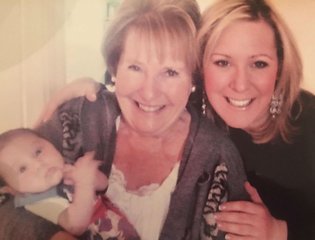
BRCA: Three generations
How common are BRCA gene faults?
Anyone can carry a BRCA gene fault; however, they are found to be higher amongst people from certain backgrounds including people with Ashkenazi and Sephardi Jewish heritage. In the general population, around 1 in every 200 people are BRCA1 or BRCA2 gene fault carriers. 1 in 40 Ashkenazi Jews and 1 in 140 Sephardi Jews carry a faulty BRCA gene.
Men are just as likely to carry a BRCA gene fault as women.
Why is the Ashkenazi and Sephardi Jewish population at higher risk?
Over 90% of the BRCA faults found in the Jewish community are one of three “founder mutations”. Researchers have tried to trace the origins of these specific faults. One theory is that the original faults occurred around the time of a genetic “bottleneck” around 500-600 years ago, when the population reduced down to as few as 350 people. This was followed by a large expansion in the population which caused the current high frequency of the faults in the Jewish population.
You can read more about this here.
The three founder mutations
When you have genetic testing, your results tell you where on the BRCA1 or BRCA2 gene the spelling error has happened, and what the change is. The specific spelling errors found in the Jewish community have been studied for years, and three “founder mutations” have been identified as being much more common in people with this ancestry:
- 185delAG in BRCA1 (also known as 187delAG)
- 5382insC in BRCA1
- 6174delT in BRCA2
What are my risks if I carry a BRCA1 or BRCA2 gene fault?
Having a fault in either the BRCA1 or BRCA2 genes can increase a person’s lifetime risk of breast cancer, ovarian cancer, prostate cancer and pancreatic cancer. The table below summarises the risks compared to the general population’s risks.
| Population | BRCA1 | BRCA2 | |
| Ovarian cancer risk to age 80 | 2% | 44% (Risk increases from age 40) | 17% (Risk increases from mid-late 40s) |
| Breast cancer in unaffected women to age 80 | 14% | 72% | 69% |
| Male breast cancer risk to age 80 | 0.40% | 4% | |
| Prostate cancer risk to age 85 | 18% | Similar to population risk | 41% |
| Pancreatic cancer risk to age 80 | 2% | Similar to population risk | Men 3%, women 2% |
The Royal Marsden NHS Foundation Trust, A Beginner’s Guide to BRCA1 and BRCA2, December 2023
What if I test negative?
If you test negative for a BRCA fault you will know that you haven’t inherited that fault and the increased risk that goes along with it. However, you should still be aware that there are other gene faults that can impact your risk. In the general population it is now thought that nearly 1 in 2 people will develop cancer in their lifetime, so it is important to be aware of any changes in your body, regardless of your BRCA status.
I have Jewish heritage – what are my options for testing?
NHS genetic testing programme
NHS England is offering free BRCA gene fault testing for anyone over the age of 18 living in England with one or more Jewish grandparent, of any type of Jewish heritage (Ashkenazi, Sephardi or Mizrahi). You do not have to have a personal or family history of cancer to qualify. The test involves providing a saliva sample, using a kit sent through the post.
Read more about the programme and who is eligible here.
New NICE Guideline March 2024
The National Institute for Health and Care Excellence (NICE) is a body that provides national guidance and advice to improve health and social care in England. In March 2024 they introduced new guidelines around inherited risk of ovarian cancer.
This update included a new recommendation that if you have at least one grandparent from one of these populations you are eligible for genetic testing for the founder mutations commonly found in that community:
- Ashkenazi Jewish
- Sephardi Jewish
- Greenlander
If you think you are eligible for this testing, you should speak to your GP about being referred to your local genetics team.
What if I’m not in England?
The NHS Jewish BRCA testing programme is only open to people in England.
NICE guidance applies to England, though the guidance is usually followed in Wales. Northern Ireland has a process to review whether to follow NICE guidelines.
Scotland has specific guidance through SIGN (Scottish Intercollegiate Guidelines Network (SIGN)) where guidance does now allow for people with Jewish ancestry to be eligible automatically, but their ancestry is taken into account alongside family history of cancer.
What are the advantages of genetic testing?
The advantages of having a genetic test are around understanding the things you and your family can do to reduce the risk of developing cancer. If you test positive for a genetic fault there are a number of options available to you:
- You can make changes to your lifestyle to reduce your risk of cancer
- You will be eligible for earlier screenings for some types of cancer
- You may choose to take risk-reducing medication
- You can have surgery to reduce your risk of certain cancers
- There are options available if you are planning to start a family.
Where can I find support?
Many people find it helpful to connect with others when they are going through this process. You can find a list of useful organisations who provide information and support here.
Reviewed: 24 June 2024