Gilly: "My experience as a NICE patient expert"
Gilly was diagnosed with stage 4 ovarian cancer after an emergency admission to A&E with abdominal pain.
Following treatment, including surgery and chemotherapy, and a recurrence several years later, she started taking the PARP inhibitor niraparib (Zejula) as maintenance therapy. You can read her story in more detail here.
As well as being part of the Ovarian Cancer Action Research Network, Gilly agreed to serve as a nominated patient expert in the NICE appraisal of the drug niraparib. Here she tells us what the experience was like.
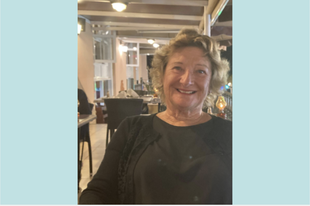
Gilly
How did you feel sharing your experiences?
I felt that being able to put forward my experiences was very positive, both with the initial submission, via OCA and then through directly to NICE. It took a lot of reflection on my part to make sure my responses were medically detailed, yet emotive. I wanted to make sure that my ‘voice’ as a patient was understood. Uploading my submission through the NICE portal wasn’t easy initially, but their Tech support was great and no problems afterwards with uploading or downloading documents.
How much reading was involved before the meeting?
The committee papers were 2,500 pages!!! I liked that I could read as little or a lot of the this prior to the meeting. But I was directed to what was essential to read and I understood these. However, out of interest I skimmed through most of the papers. I found most of it readable, but the scientific graphs etc were over my head! I am so glad I did read through the evidence about outcomes, because was it was so positive for patients who have been 5 years or more on Niraparib.
The papers were only available a week before the meeting, so future patient reps need to bear this in mind.
What was the meeting like?
The meeting was over Zoom. This started with a breakout group with the facilitator ensuring we understood how the meeting would run, and how I would be involved. Then we moved to the main meeting.
Wow, a lot of people took part! Although public observers were watching, only the NICE team, committee, and patient and medical experts were visible but this was quite daunting to see on the Zoom screen. I had to briefly introduce myself at the start of the meeting when the Chair requested. I hadn’t prepared for this, so that is a tip first future reps… however I was OK.
My involvement in the meeting itself was minimal - about 2/3 minutes. My tip would be to take a deep breath before you speak (I was a bit shaky). I was a bit nervous and feel I could have contributed more. But pleased I was there as a rep.
The rest of the meeting was complex and detailed- sometimes interesting and sometimes boring if being honest. But I was engaged.
Throughout I did make notes so that I could keep to key themes and include them when I spoke. For me, I wanted to really drill home how fear of recurrence impacts on patients and family.
What happened after the meeting?
I wasn’t sure which way the panel would vote - I just hoped it would be yes to approval.
I received positive feedback through OCA and written thanks from NICE with details on how to claim an honorarium payment for my time.
I was then notified of the decision that the committee made. The final decision to approve the drug is a great outcome from the NICE panel.
My key tips for anyone getting involved as a patient expert:
- There is a time commitment to the whole process
- Be prepared for your introduction
- Keep notes throughout the meeting
- Take a deep breath before you speak (I was a bit shaky)
- Summarise your views based on the key points raised during the meeting, and remember to emphasise points from your initial responses
“Patient experts are a hugely important part of the NICE decision process on whether a treatment drug should be approved. The committee have pages and pages of data on all the studies but they also need to hear real accounts from women with the disease. Ovarian Cancer Action gives the bigger picture, but there’s nothing more powerful than hearing directly from the women involved. the nominated patient expert. Not only did Gilly share her evidence ahead of time for the committee to read in advance, she also spoke eloquently and clearly in the committee meeting about what it is like to receive a diagnosis of ovarian cancer, and the impact Niraparib has had on her life. We are so grateful to her, and hope others will be inspired to do the same.”
Would you recommend being a nominated patient expert?
This is a difficult one, as it's dependant on so many factors:
Where are you in your treatment or recovery? Does the drug being considered affect you currently? How much time do you have to devote to it? Do you have the ability to desensitise when reading sensitive background stats and outcomes for example on survival etc?
I wouldn’t like to say carte blanche I’d ‘recommend’ it, but for others to ‘consider’ it. I would do another, if appropriate to me.
Find out more about the Ovarian Cancer Action Research Network, including how to sign up, on our website.