Melony's story: "I didn’t think I had any ovarian cancer symptoms, but they were clear as day"
Low energy. A swollen stomach. Subtle changes that felt like menopause or everyday exhaustion. Like so many women, Melony never suspected ovarian cancer. It wasn’t until severe pain led to an urgent GP referral on the two-week pathway that she received the diagnosis: advanced ovarian cancer.
From early symptoms and major debulking surgery, to chemotherapy, recurrence, and learning to live with ovarian cancer; to the strength, family support and specialist care that have carried her through. This is Melony’s ovarian cancer story.
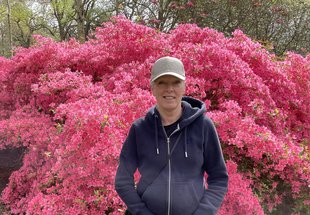
Melony "I like visiting Richmond park"
"At the time, I didn’t think I had any symptoms. Now, I can see them clear as day. My energy was low when I tried to exercise, my stomach started to get bigger – I just thought it was all the menopause. I work as an Occupational Therapist in neurorehabilitation, so being tired isn’t uncommon! I never suspected anything serious was wrong.
It wasn’t until I spent a week in bed with severe pain and swelling that I started to worry. I saw my GP, who referred me urgently to the 2-week pathway. Within two weeks, I was diagnosed with stage 3/4 ovarian cancer.
To be completely honest, I was terrified. My consultant reassured me – she told me that she wanted to cure me, and she was determined to find a way. She referred me to Professor Fotopoulou, a specialist surgeon in my type of cancer. I was told she had a brilliant reputation - I felt hope.
Before surgery, I had to have fluid drained from my stomach twice. It was an unpleasant and frightening experience, made harder by COVID restrictions that meant I had to attend appointments alone. I saw such a lovely Doctor in A&E, and I still remember his kind words.
I was also trying my best to keep things as normal as possible for my 14-year-old son. We explained it to him in a calm, factual way and offered him lots of support and let his school know, they were great and regularly checked in with him. Otherwise, I attempted to be myself as much as possible and made sure he had his regular routine, plus lots of fun. And a little spoiling!
I met Dr Fotopoulou in March, two weeks before the surgery. She was so kind, taking the time to explain everything to me, and apologising for the fact that they couldn’t continue to drain the fluid in my tummy and risk the infection. I obviously told her this wasn’t her fault!
In April 2022, I underwent major surgery - a complete hysterectomy and debulking, including my liver and diaphragm. The operation lasted seven hours, and I spent six nights in hospital. Dr Fotopoulou saw me the following day after surgery and told me there was no residual disease - . I was extremely impressed by how Dr Fotopoulou closely monitored me and led her team. I have immense respect and gratitude for her. The anaesthetist and other Doctors were very positive and complimentary about her brilliant intervention, which was so reassuring.
I cannot express how relieved I was to hear there was no residual disease - the care I received was exceptional. My husband visited regularly, which was a lifeline as my extended family lived far away, so I couldn’t make the trip. Truthfully, I found the whole experience of surgery both physically and emotionally overwhelming. The incredible support from the ward staff made all the difference."
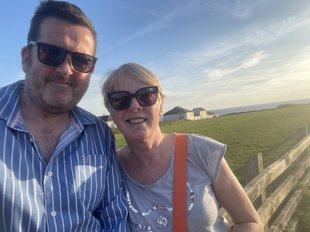
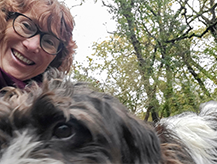
Melony "I love going on holiday with my family, this is in north Devon"
"After surgery, I was referred for preventative chemotherapy for five months, followed by a PARP inhibitor. However, even with all this, the cancer sadly returned in December 2023.
More chemo followed, with three hospital admissions due to both infections and covid. I ended up anaemic this year, which meant I had to have several blood transfusions. I started on Citalopram following surgery due to the sudden menopause and continued this, increasing the dose slightly in recent months due to some anxiety and depression. I’ve also had some sessions with a counsellor, which have been really helpful.
My husband was, and continues to be, very supportive. My son has seemed to manage as well as can be and did really well in his GCSEs this year – he’s now starting his A-levels. I also had the great support of my mum, sister and friends. This love and support made such a big difference.
Thankfully, my employer has been supportive, which is good because I love my job! I find it so motivating to continue going into work, and it’s important to me to try and keep doing this."
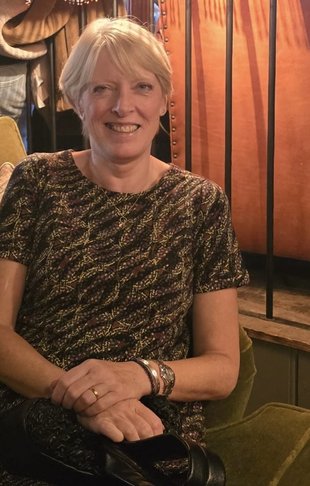
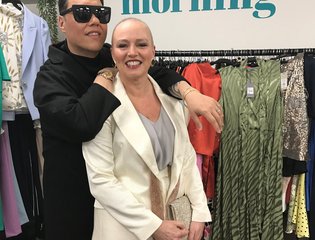
Melony - enjoying a meal out with her friends
"One complication of all the chemotherapy is I've developed neuropathy in my feet, which was initially painful but helped a lot by seeing a pain consultant. I continue to have some pain and reduced sensation, but it’s a lot better. The anaemia has affected my energy levels a lot, but I walk to the station most days and continue Pilates. I hope to start jogging and cycling again.
I decided to become a Patient Network Volunteer as following my diagnosis, I was aware that ovarian cancer is a less common cancer and so there’s less awareness and education provided, plus less research.
I'm aware of all the amazing and hard work Ovarian Cancer Action and other charities do to make a difference. The treatment and care I've received have given me extra years, which I remain entirely grateful for."
Ovarian cancer symptoms can be vague and are often mistaken for menopause, stress or everyday life.
Stories like this help others recognise the signs, understand what treatment for advanced ovarian cancer can involve, and see that even after recurrence, there is strength, support and hope.
At Ovarian Cancer Action, we fund the research that makes earlier diagnosis, better treatments and longer survival possible. We also work to raise awareness so fewer women are diagnosed at a late stage.
If this story resonates with you, whether you’re living with ovarian cancer, supporting someone who is, or want to help change the future, explore more patient stories and discover how you can support life-saving research.