Julie's Story: "I had no idea that it could be ovarian cancer"
So often we hear stories of ovarian cancer being diagnosed late. In fact, around 40% of women first hear the news in A&E. Yet early diagnosis dramatically improves outcomes.
Despite not knowing what was causing her symptoms, Julie knew that something wasn’t right and spoke to her GP.
Julie’s story shows how spotting symptoms, combined with a GP who took her seriously, can make all the difference.
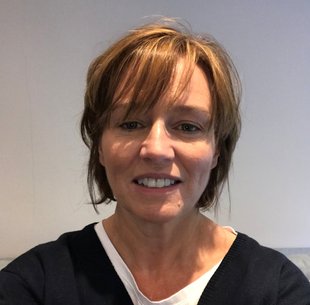
A selfie taken by Julie
Symptoms that were easy to overlook:
“A few months before my diagnosis, I started having symptoms: heavy bleeding, needing to pee a ridiculous amount, bloating, pain on my right side, and IBS-like symptoms. I thought I had a urine infection while on holiday in Washington, but it carried on, so I went to the doctor when I got home.“
Unlike many women, Julie’s GP listened and acted. With all her symptoms, he ordered a CA125 blood test, a marker sometimes raised in ovarian cancer.
“He called me in on a Friday night just as I was about to go into the cinema, to say my CA125 level was over 600. I had no idea what that meant, so I was shocked when he told me it could be ovarian cancer because he hadn’t said that was what the blood test was for. I had had no awareness that it could be ovarian cancer until that phone call.
He put me on a two-week pathway. The ultrasound was arranged quickly, and so was the referral.”
This early action meant Julie was diagnosed with stage 1c ovarian cancer and stage 1a womb cancer in November 2018.
“The gynaecologist told me I had a mass and needed a CT scan to confirm it. It measured 10cm. After an MDT meeting (a meeting where specialists from different medical fields come together to review your scans, test results and treatment options), I was given a date a month later for a total abdominal hysterectomy.
A week later, I got a call to say they’d missed a blood clot on my scan and I needed to go in urgently for an injection. After that, I had to travel to Southampton for an IVC filter (a small device placed in a major vein to catch blood clots before they reach the lungs) to be fitted before my operation. My pre-op appointment was also in Southampton, even though this wasn’t my local hospital.”
Two weeks after Julie’s surgery, she had the ovarian cancer diagnosis confirmed. She started chemotherapy six weeks post-op. She found the time waiting between surgery and chemotherapy a low point.
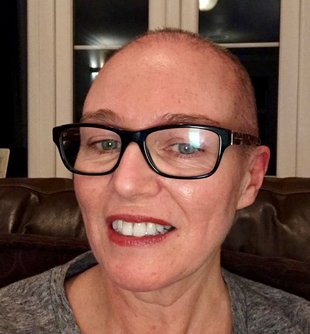
Julie after chemotherapy
The challenges of travelling further for care:
“Travelling to Southampton for my pre-op was difficult to organise. It meant planning around a much longer journey than if it had been at my local hospital.
After the surgery, the trip home was even harder. The longer drive was painful, and even simple movements like getting in and out of the car were incredibly uncomfortable.
During treatment, I was in the hospital for three nights. My family and a couple of close friends still made the effort to visit, even though it was more than an hour’s drive each way. Their visits meant a lot as it wasn’t easy for them to get there.“
Treatment alone is challenging, but managing appointments, travel, and the administrative side of care while having a support network around can make a huge difference.
After a total hysterectomy and chemotherapy, Jule was told she was NED in April 2019.
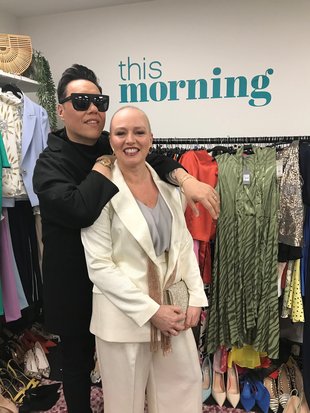
Julie and TV sylist Gok Wan
Life, recovery and hopes for the future:
“Since my operation in 2018, I am physically well, with no recurrence of cancer. I do wish there were a yearly check-up focused on mental health, as fear of recurrence takes a serious toll on your mental state of mind.
I retired in 2020 but continued to volunteer, including at a local charity in Bracknell Forest, supporting local families. In my spare time, I enjoy staying active with aqua aerobics, pilates, running, and ballroom dancing.
I fully support more research, better treatments, and greater awareness of ovarian cancer — anything that can help others going through what I experienced. I’m all for it.”
There are many factors that contribute to the success of treatment. From recognising symptoms and having a GP who listens, to the stage and grade at diagnosis, and treatment options available.
Women shouldn’t have to face another barrier on an already difficult journey. We want to make sure that the quality of treatment is the same no matter where you are in the UK.
That’s why we created the Surgical Fellowship Programme, to ensure people can get the care they need close to home and near their loved ones, giving them the best chance of a positive outcome.