Amber’s story: “Knowing about Lynch Syndrome gave me more control”
Around 20% of ovarian cancers are linked to genes.
Understanding genetic risk can open up options for monitoring, prevention and earlier intervention. However, many people have never heard of Lynch Syndrome or BRCA until they affect their own family.
Amber was diagnosed with Lynch syndrome after her mum’s genetic testing revealed an inherited risk. Her story highlights how genetic information can feel overwhelming, the emotional impact of living with increased cancer risk, and how early knowledge can offer something powerful - control.
“I was diagnosed with Lynch syndrome in January 2025. It came about because my mum has another medical condition, and her consultant wanted to do full genome testing to try and find a gene for that condition.
They didn’t find the gene they were looking for, but incidentally found that my mum has Lynch syndrome.
I’d never heard of Lynch syndrome before. When my mum first told me, I remember just saying, ‘What’s that?’ I had absolutely no idea what it meant or what was involved.”
When I first learned about Lynch syndrome in our family, it was a really confusing time.
“As my mum was the first family member to receive the diagnosis, I didn’t really understand what it meant. I went to my mum’s geneticist appointment with her, where they explained in depth what it meant and what the next steps would be.
It was a quick learning process, quite scary, but at the same time it didn’t feel like it was really happening to our family.
We were told it’s hereditary and that children have a 50% chance of having it. My sister and I were advised to be tested. My sister went through the referral process first and was told she doesn’t have Lynch syndrome.
I was referred in February last year and got my results in January this year. Even when I went for my own geneticist appointment, I don’t think it had actually sunk in what I was being tested for.
It felt like an out-of-body experience. I listened, nodded, took in the words — but I hadn’t processed the significance of it all. It was too big.
That being said, I immediately believed I carried the gene. I just felt it. Even though everyone told me to think positively, I couldn’t shake that gut feeling."
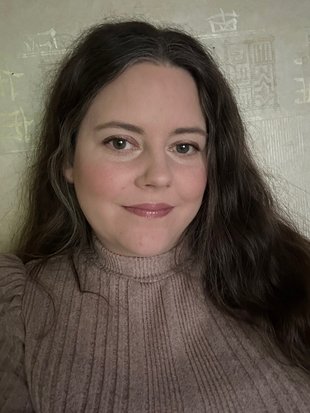
A selfie taken by Amber
Getting the diagnosis was the worst part of the process. When those words came out of the phone ‘you do have the gene’ my heart sank. All that went through my mind was how much tougher life was going to be.
“I think it made it worse that I’d waited three months for the test results, so I’d had three months of replaying how the conversation was going to go. A lot gets said about what testing you’ll need and what comes next, but nothing is said about how to handle the mental health side of things when you get this diagnosis.
As soon as I came off the phone, I texted my husband, who was at work, and then went downstairs to tell my mum.
Even though I know family members who also have Lynch syndrome, getting your own diagnosis feels like a battle you have to fight for yourself. It plays on my mind constantly, knowing I have this extra thing to deal with.
As a family, we tend to update each other and discuss our experiences and options. It helps to share knowledge and hear from people who are going through it as well.
After my diagnosis, my geneticist referred me to the bowel cancer screening programme, so from the age of 35 I’ll have two-yearly colonoscopies. I’m due to have my first one next month.
I was also referred to a gynaecologist to discuss cervical, ovarian and endometrial cancer risks, things like yearly ultrasound scans, the importance of smear tests, and potentially having a hysterectomy around menopause age.
They also suggested speaking to my GP about being tested for H. pylori and talked about aspirin, which is said to be linked to reducing the risk of developing some cancers.”
Getting the diagnosis was the worst part of the process. When those words came out of the phone ‘you do have the gene’ my heart sank. All that went through my mind was how much tougher life was going to be.
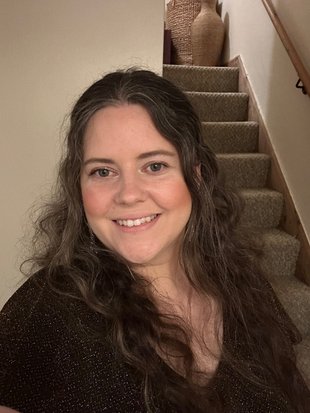
Amber smiling at the camera
“One of the biggest moments for me was receiving a letter inviting me for a hysteroscopy after an ultrasound. It really scared and confused me because I had no symptoms and didn’t understand why such a big procedure was being suggested.
I rang the gynaecology department and they arranged for a chief consultant to call me back. He was really kind, explained everything in depth and told me he’d reviewed my scans. He said that for my circumstances at the time, the procedure could be deferred.
He reassured me and said I could call any time if I had questions. That really made all the difference.”
" I do feel having this knowledge early has given me more control over my health. Things can be monitored and hopefully caught before they progress to a more advanced stage. Steps can be put in place to prevent worse things from happening, and as technology improves, I hope there’ll be more options in the future too."
“Day to day I work as a receptionist and administrator for a children’s mental health service. It’s challenging but rewarding. I love going to the cinema, reading, and I’m really passionate about wildlife and wildlife photography.
Since learning I have Lynch syndrome, I spend more time outdoors with my camera. It helps me feel calmer, more present and less stressed.
I think receiving this diagnosis has made me more inclined to do the things I really want to do. I make the most of opportunities now. If there’s something I want to pursue, I make sure I do it.
I hope people take away that it’s really important to go for any tests you’re invited to. Smear tests, ultrasounds, anything. They’re not pleasant, but they’re there to keep you healthy and potentially save your life. Please don’t take your health for granted.
And I hope people know this: you’re never alone. Even when it feels like a lonely experience, you’re not going through it alone.”
If Amber’s story has raised questions about inherited cancer risk, symptoms or testing, you can find a hub of Hereditary Cancer Risk information on our website.
Ovarian Cancer Action works to fund research, improve awareness and provide trusted support so that inherited risk is recognised earlier and lives can be saved.
By using our tools, sharing our resources and supporting our work, you play a role in improving prevention, diagnosis and outcomes for everyone affected by ovarian cancer.