Private cancer treatment
You may decide to access private healthcare for your diagnosis and/or treatment. This is where you (or a health insurance provider) pay for some or all of your cancer care. Here we answer some of the commonly asked questions about private cancer treatment.

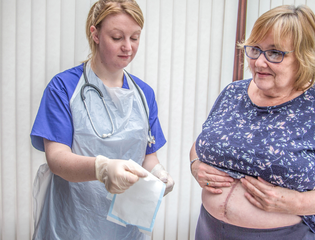
Nurse and patient having a conversation
Why would someone choose to pay for their cancer care?
Reasons to pay privately for cancer care include:
- You’re concerned about waiting times, as you can often get seen more quickly for tests
- You want to have a treatment that isn’t available through the NHS
- You would like to get a second opinion on your diagnosis/ treatment (find out more about getting a second opinion here – However, you can get a second opinion as part of your NHS care)
- It is more convenient to travel to a private hospital for treatment than your nearest NHS hospital
- There are more options on appointment and treatment times
How do I pay for private healthcare?
You pay for private healthcare either through a private medical insurance (PMI) policy that you already have in place, or with your own money, which is called self-funded.
What will it cost?
The cost to you will vary a lot depending on what treatment you are getting and how it is being paid for. For example, you could:
- Have a private health insurance policy that you pay into which may cover some or all of your care.
- Have an employer health insurance policy that your workplace pays for which may cover some or all of your care
- Self-fund and pay the costs of your private care yourself. This can become very expensive depending on treatment needs.
If you have your own or employer health insurance, it’s important to check what exactly this covers as it may not include all of your treatment. The policy would have to be in place before your diagnosis.
When self-funding, you should be told the expected costs in advance, but this may change and if unexpected issues come up then costs could increase. Ask about the expected costs if they are not discussed with you. Private hospitals may offer costs in a package, or individually. They may also offer a payment plan where you can pay in installments.
It is important that you understand all the costs involved, and have considered if it is affordable for you before you agree to start private care.
Where will I get my treatment?
Private healthcare is given either at a private hospital or in a private unit that is part of an NHS hospital.
If I go private, does that mean I can’t go back to NHS treatment in the future?
You still have the right to NHS treatment, even if you pay to go private, and you can choose to move back to NHS at any time. However, you would join the waiting list as normal, you would not be able to “skip the queue”. For example, if you pay for a private consultation and diagnostic tests because you were concerned about waiting to confirm your diagnosis, you can then still use the NHS for treatment, but you would wait the same time as anyone else with that diagnosis to receive treatment. If you are taking a treatment that isn’t available on the NHS that you have paid to access privately, you would no longer be able to access this treatment when you switch back to NHS treatment.
Can I do a mix of NHS and private healthcare?
Patients can pay for additional private healthcare while continuing to receive care from the NHS (for example if you are an NHS patient but want to pay privately for cancer drugs not available on the NHS). There are certain rules about this including:
- There should be clear separation between NHS and private care
- Patients who pay for private care in these circumstances should not be put at any advantage or disadvantage in relation to the NHS care they receive. They are entitled to NHS services on exactly the same basis of clinical need as any other patient.
- The NHS should continue to treat any patient in an emergency. You can read more about these rules here
How do I choose a private provider?
If you are going private to access a specific procedure or see a particular doctor, you may already know where to be referred. You may have received recommendations from others with a similar diagnosis. You may simply want to be seen at a certain hospital that specializes in your type of cancer but don’t mind which doctor you see. If you don’t have a preference like this, you can search for specialists and hospitals, including their patient and independent regulator rating on the Private Healthcare Information Network.
It’s worth noting that some insurers may have a set list of hospitals or specialist that you can use, so it’s worth checking this beforehand. Not all treatments are available through every private provider so you would need to find this out if this is your main reason for going private.
Why is my NHS consultant listed as a private healthcare doctor?
Many consultants split their time working in both the NHS and private healthcare. NHS doctors cannot advertise private services to you as an NHS patient, but you can discuss with them if you’d like to see them in their private healthcare practice.
How do I arrange private cancer care?
Once you know which doctor or hospital you would like to use, you can organize your treatment by:
- Asking your GP to refer you. This may involve paying an administration fee.
- Asking your NHS cancer doctor to refer you
- Self referral by contacting the private hospital or doctor yourself. Note: If you have private health insurance, there may be a specific process or paperwork, so check with the insurers first. NHS guidance is that the best route is to be referred by your GP or specialist, as they have all your medical information to pass over to the new hospital.
Are there any downsides to private healthcare?
Yes there can be downsides to private healthcare. These include:
- The cost
- Some treatments may not be available
- If a consultant only works in private healthcare they may treat less patients with ovarian cancer than an NHS consultant, meaning they could be less specialist. In ovarian cancer it's very important to be treated by a specialist who is regularly treating other women with ovarian cancer.
Further information
You can find out more from the following organisations: