Niraparib approved by NICE for use at first line
NICE have today issued final draft guidance approving the use of niraparib (Zejula) as an option for the maintenance treatment of advanced epithelial high-grade ovarian, fallopian tube or primary peritoneal cancer. It can be used after the cancer has responded to first-line platinum-based chemotherapy, for patients who did not have bevacizumab or couldn’t tolerate it.
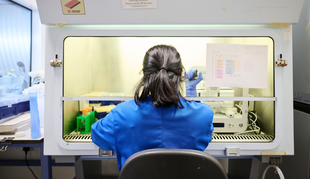
Niraparib (also known by the brand name Zejula) is a PARP inhibitor.
What is niraparib?
Niraparib (also known by the brand name Zejula) is a PARP inhibitor. These are a type of targeted maintenance treatment that can reduce the chances of ovarian cancer returning, or lengthen the time before it does. You can read more about different targeted treatments here.
What does this mean?
Niraparib is now routinely available on the NHS in England for people with stage 3 or 4 high-grade ovarian cancer after their first course of chemotherapy. It’s an option for those who haven’t taken, or couldn’t take, bevacizumab alongside their chemotherapy. This applies regardless of your BRCA or HRD test results.
Niraparib has been available as a first-line maintenance treatment for several years through the Cancer Drugs Fund (CDF). The CDF gives access to treatments when there’s promising data available on how well the drug works, but more evidence is needed to approve it. This means people can take the drug earlier, while more data is gathered over a period of around two years.
NICE decided in 2021 that patients can access niraparib this way, while longer follow-up data from the PRIMA clinical trial was gathered to decide whether the drug is effective enough to be funded on the NHS. They’ve just completed their review of this evidence. The evidence the company shared looked specifically at this subgroup of patients.
Why did NICE make this decision?
The NICE committee reviewed all the available evidence, including patient and medical expert submissions, and decided that there is enough evidence to show that niraparib provides benefits and value for money. The evidence suggests that niraparib increases how long people have before their condition gets worse and is a cost-effective treatment option.
This means it can be used routinely across the NHS in this group of patients.
How were Ovarian Cancer Action involved?
Ovarian Cancer Action, along with other patient organisations and medical experts, was invited to submit evidence as part of the evidence-gathering process. Thanks to our supporters kindly sharing their experiences with us, we were able to tell NICE about the realities of niraparib as well as ovarian cancer treatment more broadly.
We also nominated a patient expert, Gilly, who gave a written statement and presented her experience with niraparib to the NICE committee during the December 2025 meeting.
Gilly“I was a bit nervous during the meeting, but pleased I was there as a patient rep. I really do believe that niraparib has the potential to keep many women NED after first line, and give them hope and longevity.”
Gilly says: “I was a bit nervous during the meeting, but pleased I was there as a patient rep. I really do believe that niraparib has the potential to keep many women NED after first line, and give them hope and longevity.” “
You can read more about Gilly’s experience of being a NICE patient expert here.
Marie-Claire Platt, Director of Research and Policy at Ovarian Cancer Action says:
Marie-Claire Platt, Director of Research and Policy at Ovarian Cancer Action“We’re so grateful to Gilly for sharing her experience of being diagnosed with ovarian cancer and taking niraparib. Her input was so important at the NICE meeting, and she helped the committee see the point of view of a patient who has benefited from the drug. Patients like Gilly and their doctors need choices when it comes to maintenance treatments for ovarian cancer, so we are pleased that niraparib is now available at first line through routine commissioning on the NHS in England.”
There is a period of appeal open for this decision before it is published. It’s important to note that the NICE decision on this treatment doesn’t impact anyone who is already taking the treatment.
Access to targeted treatments varies depending on where in the UK you live, and on specific eligibility criteria, so speak to your cancer team to discuss your treatment options in detail. In England, which drugs are available on the NHS is decided by the National Institute for Health and Care Excellence (NICE).
In Wales, generally, the guidance produced by NICE is followed, but this is overseen by the All Wales Medicines Strategy Group (AWMSG).
In Northern Ireland, the Department of Health makes decisions, but they often follow NICE.
In Scotland, the Scottish Medicines Consortium (SMC) makes decisions about NHS Scotland, and this is not related to NICE decisions.